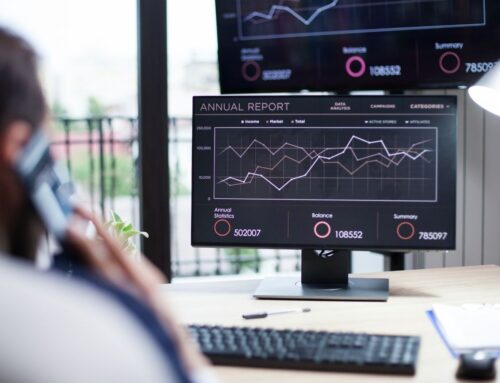
In today’s fast-paced business environment, timely and accurate financial information is no longer a luxury – it is a necessity. Organizations are operating in increasingly complex markets where decisions must be made quickly and with confidence. Real-time financial reporting has emerged as a critical capability, enabling leaders to move beyond static, historical reports and toward dynamic, data-driven decision-making.
At Vica Innovations, we see real-time financial reporting as a foundational element of modern finance – one that empowers organizations to respond faster, operate more efficiently, and gain a clearer view of their financial health.
What Is Real-Time Financial Reporting?
Real-time financial reporting refers to the continuous collection, processing, and presentation of financial data as transactions occur. Unlike traditional reporting models – where data is compiled weekly, monthly, or quarterly – real-time reporting provides immediate visibility into key financial metrics such as cash flow, revenue, expenses, and profitability.
By integrating data across finance systems, enterprise platforms, and operational tools, organizations can access up-to-date financial insights through dashboards and automated reports, without waiting for manual consolidation or end-of-period closes.
Why Real-Time Reporting Matters
1. Faster, More Confident Decision-Making
When leaders have access to current financial data, they can make informed decisions in the moment. Whether it’s adjusting budgets, managing working capital, or responding to market changes, real-time insights reduce uncertainty and improve responsiveness.
2. Improved Financial Control and Accuracy
Real-time reporting minimizes reliance on spreadsheets and manual processes, which are prone to errors and version-control issues. Automated data flows and validation rules improve data accuracy, consistency, and trust across the organization.
3. Enhanced Cash Flow Visibility
Cash flow management is critical for business sustainability. Real-time reporting allows finance teams to monitor inflows and outflows continuously, identify risks early, and take proactive measures to maintain liquidity.
4. Greater Operational Alignment
By connecting financial data with operational metrics, organizations gain a more holistic view of performance. This alignment enables teams across finance, operations, and leadership to work from a single source of truth.
5. Readiness for Growth and Change
As organizations scale, complexity increases. Real-time reporting provides the flexibility and transparency needed to support growth, adapt to regulatory requirements, and respond to evolving stakeholder expectations.
Key Enablers of Real-Time Financial Reporting
Achieving real-time reporting requires more than just technology – it demands the right combination of systems, processes, and governance:
- Integrated Financial Systems: Seamless connectivity between ERP, accounting, and operational platforms.
- Automation and Data Pipelines: Automated data ingestion and transformation to eliminate delays.
- Strong Data Governance: Clear data ownership, controls, and standards to ensure accuracy and compliance.
- Advanced Analytics and Dashboards: Intuitive, role-based reporting that delivers insights at a glance.
The Role of Technology in Modern Finance
Cloud-based platforms, automation tools, and advanced analytics have made real-time financial reporting more accessible than ever. These technologies enable finance teams to shift their focus from data preparation to strategic analysis – transforming finance into a true business partner.
At Vica Innovations, we help organizations modernize their financial reporting by implementing scalable, automated solutions that deliver real-time visibility and actionable insights. Our approach emphasizes accuracy, governance, and alignment with business objectives, ensuring that financial data supports smarter decisions at every level.
Real-time financial reporting is not just a trend – it is the future of finance. Organizations that embrace this capability will be better positioned to navigate uncertainty, seize opportunities, and drive sustainable growth.
By investing in modern reporting solutions today, finance leaders can build a more agile, transparent, and resilient organization for tomorrow.